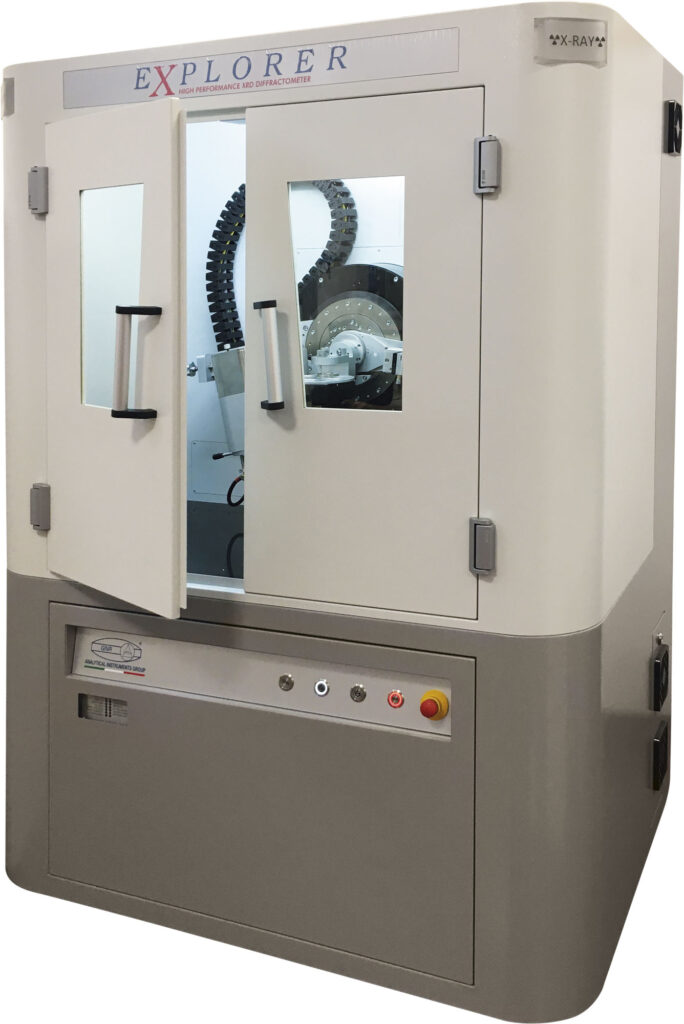
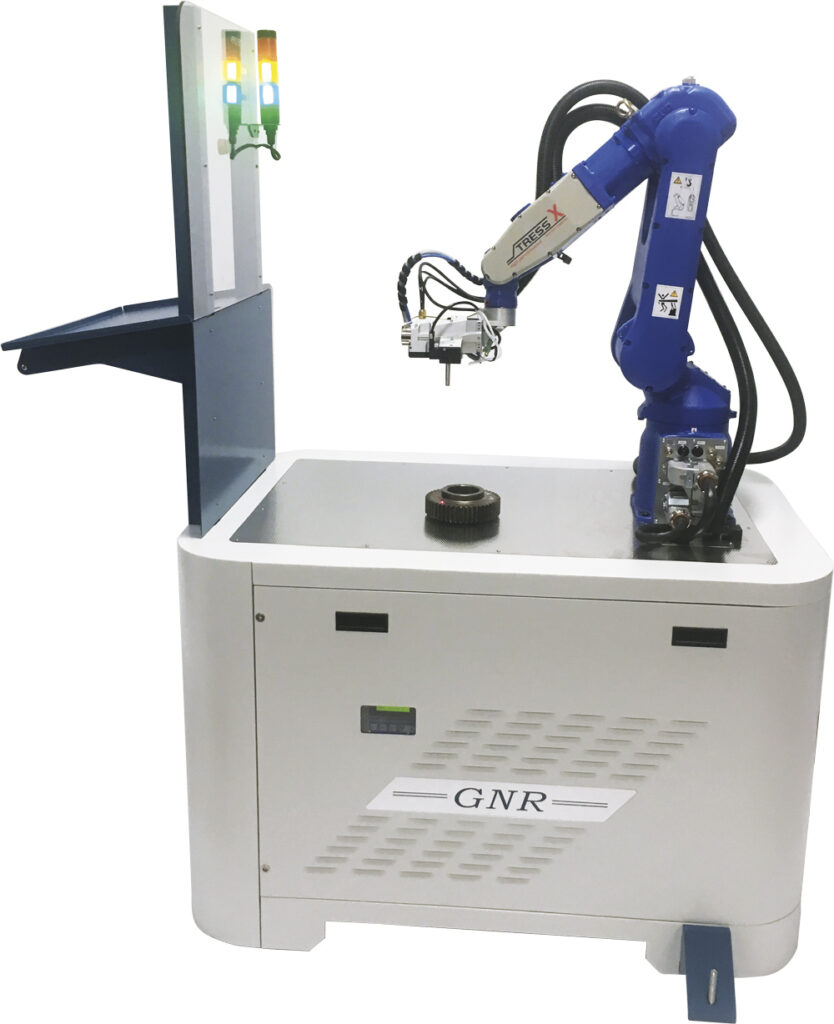
X-Ray diffraction (XRD) is a non-destructive technique for the qualitative and quantitative analysis of crystalline materials, in powder or solid form. In this context, a diffractometer is the reference instrument used to obtain a diffractogram and study the structure and composition of materials.
GNR has developed, in collaboration with academic and industrial users, a range of technically advanced and flexible X-ray diffractometers designed to meet different requirement levels and operating budgets.
The GNR XRD product portfolio covers a wide range of applications for materials characterization and quality control of crystalline and non-crystalline materials such as powders, specimens, thin films, or liquids. Thanks to this versatility, an X-ray diffractometer can be used both in R&D and in production, whenever reliable and repeatable analysis is required.
In essence, XRD is obtained as the “reflection” of an X-ray beam by a family of parallel, equally spaced atomic planes, following Bragg’s law: when a monochromatic X-ray beam with wavelength l strikes lattice planes at an angle q, diffraction occurs if the path difference of rays reflected by successive planes (separated by a distance d) is an integer multiple of the wavelength. This principle is the basis of how every X-Ray diffraction machine works and enables key information to be extracted from the measurement.
Qualitative analysis (phase analysis) can be performed by comparing the sample diffractogram with a very large number of patterns included in official databases. Single phases and/or phase mixtures can be analyzed with the software available today, making X-Ray diffractometers essential tools for material identification.
Many investigations can be carried out using this technology. In particular:
Residual stresses: forces that cause a small compression or expansion of the lattice spacing D. With XRD, it is possible to measure strain (the deformation of the original lattice) and calculate stress based on the elastic constants of the material.
Texture: the preferred orientation of crystallites in a sample. If a material has texture, the intensity of a diffraction line changes with the orientation of the sample relative to the incident beam.
Crystallite size: this information is obtained by analyzing the width and shape of diffraction lines.
Structural analysis: XRD is used to study the crystallographic structure of a material. The positions and relative intensities of diffraction lines can be correlated with the positions of atoms in the unit cell and its dimensions. Indexing, structure refinement, and simulation can be performed using specific software.
Thin films: by keeping the incident beam at low angles, it is possible to investigate multilayer properties while minimizing substrate interference. Similarly, reflectometry can be performed.
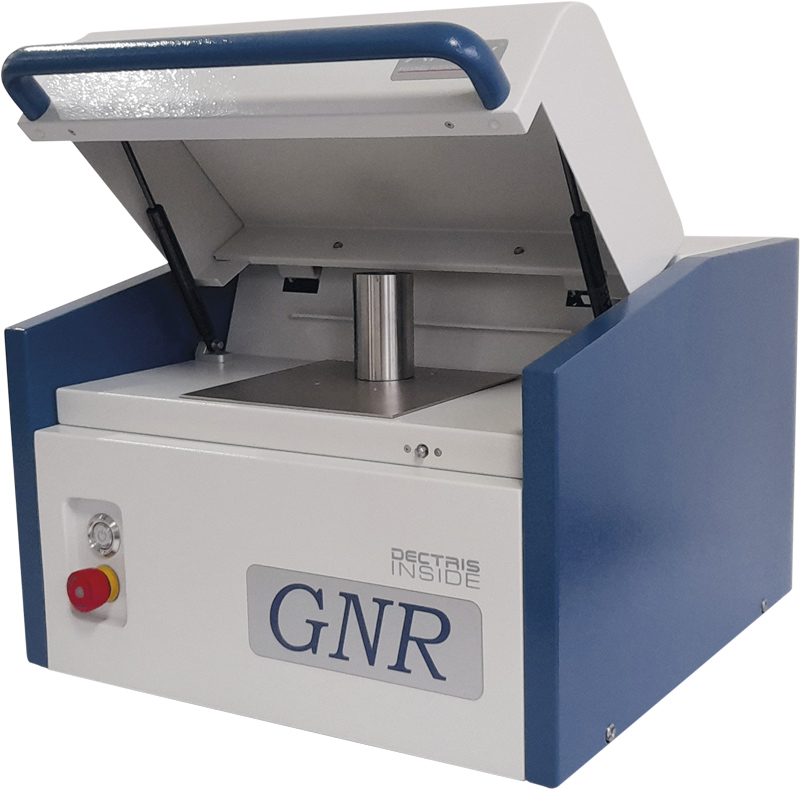
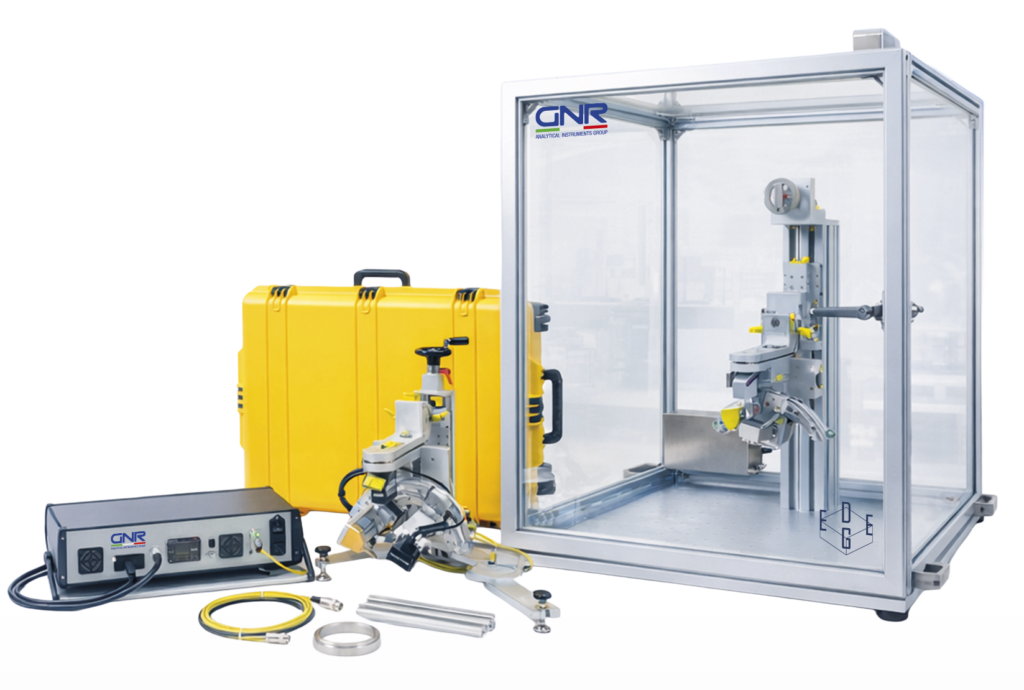
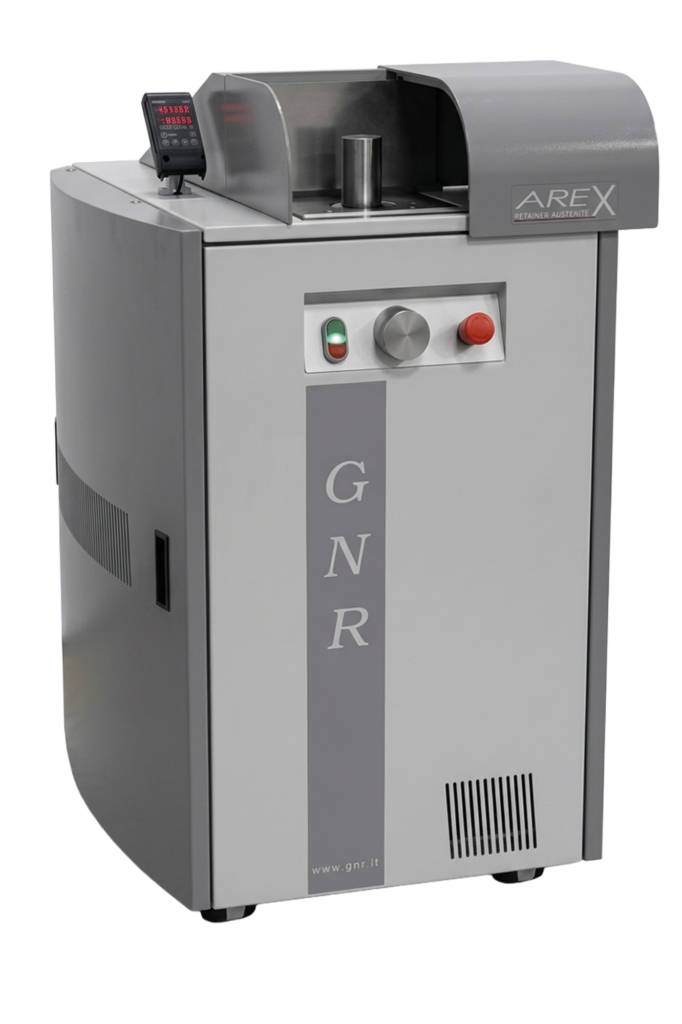
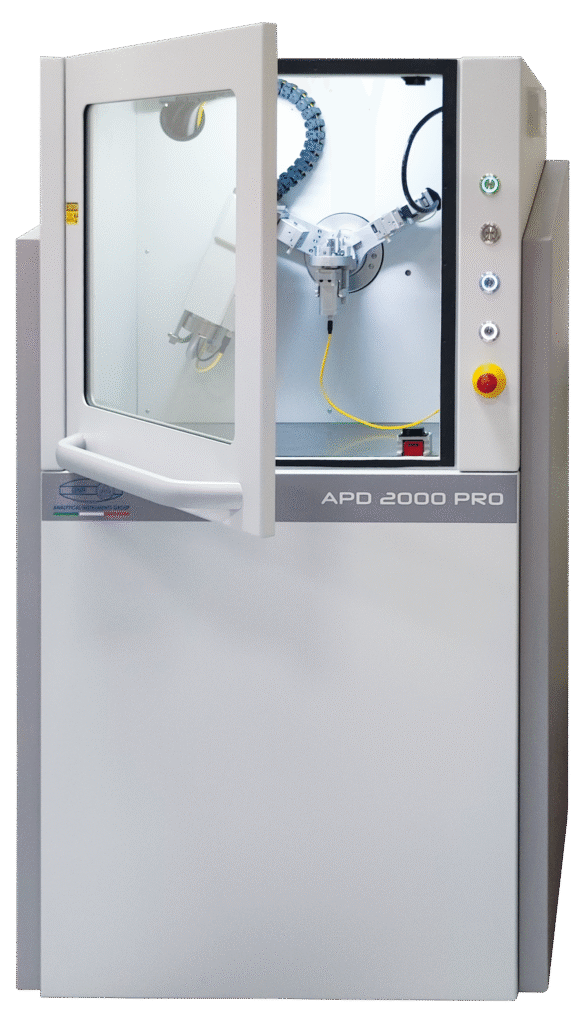
Below you will find the available GNR models, with solutions designed for different use contexts.